 Oval
Oval
 Round
Round
 Emerald
 Pear
Pear
 Cushion
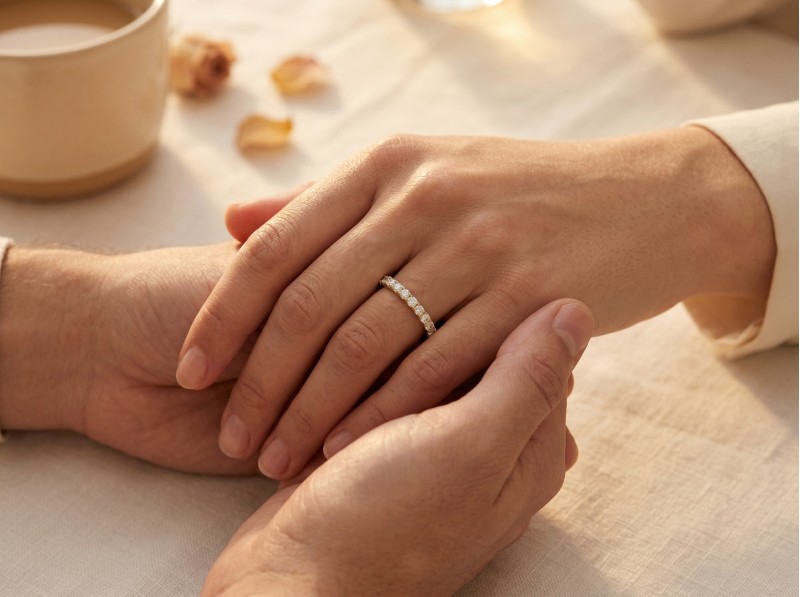
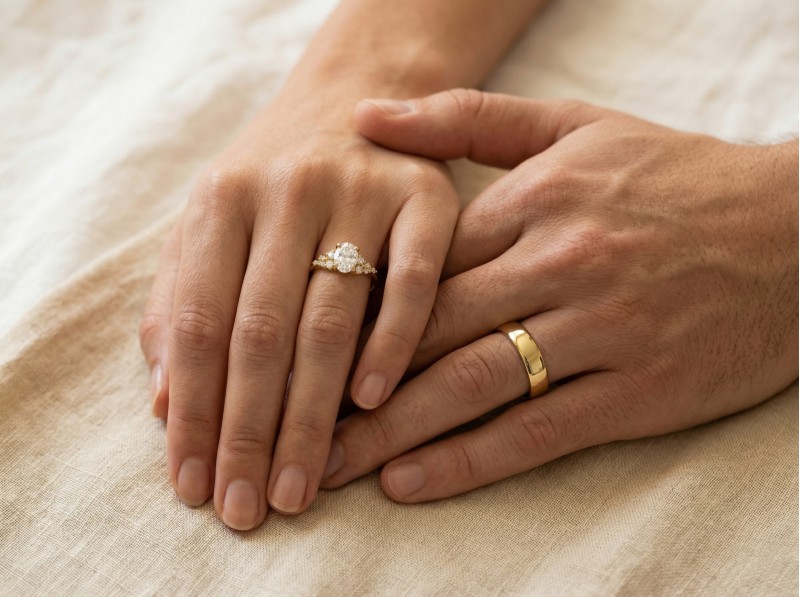
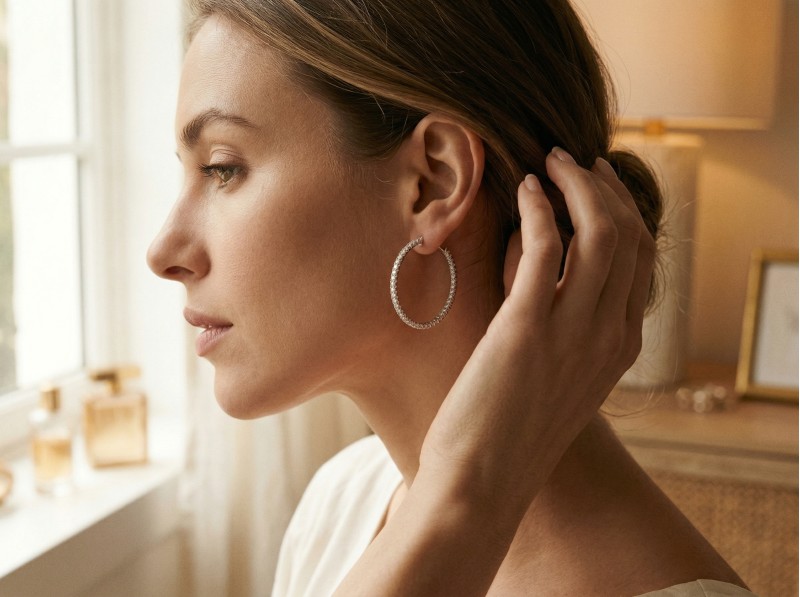
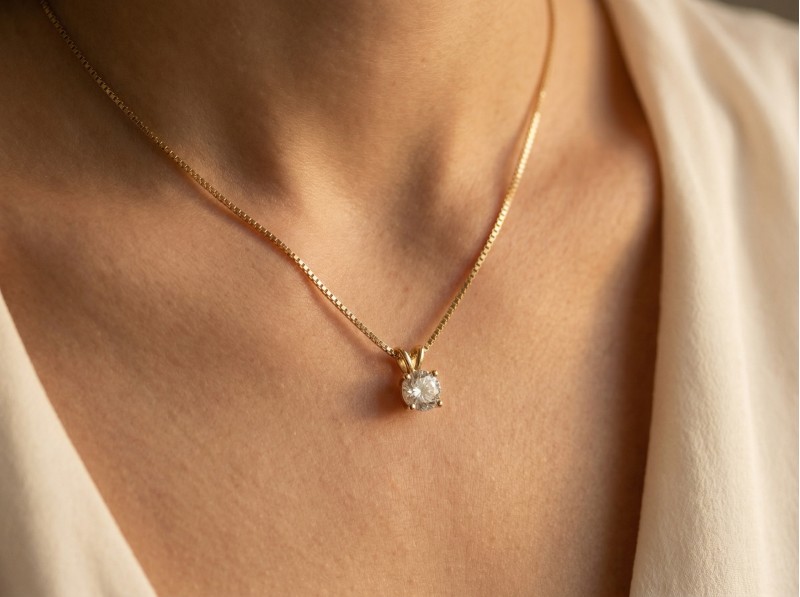
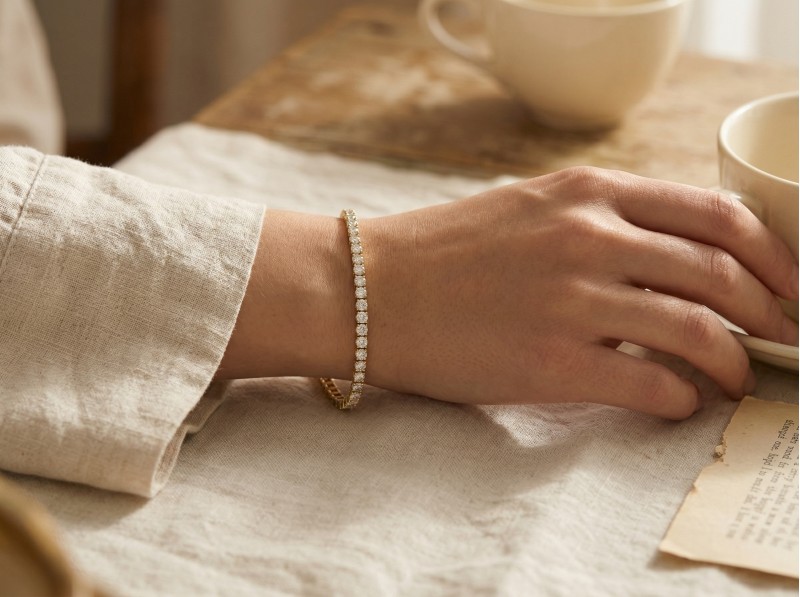



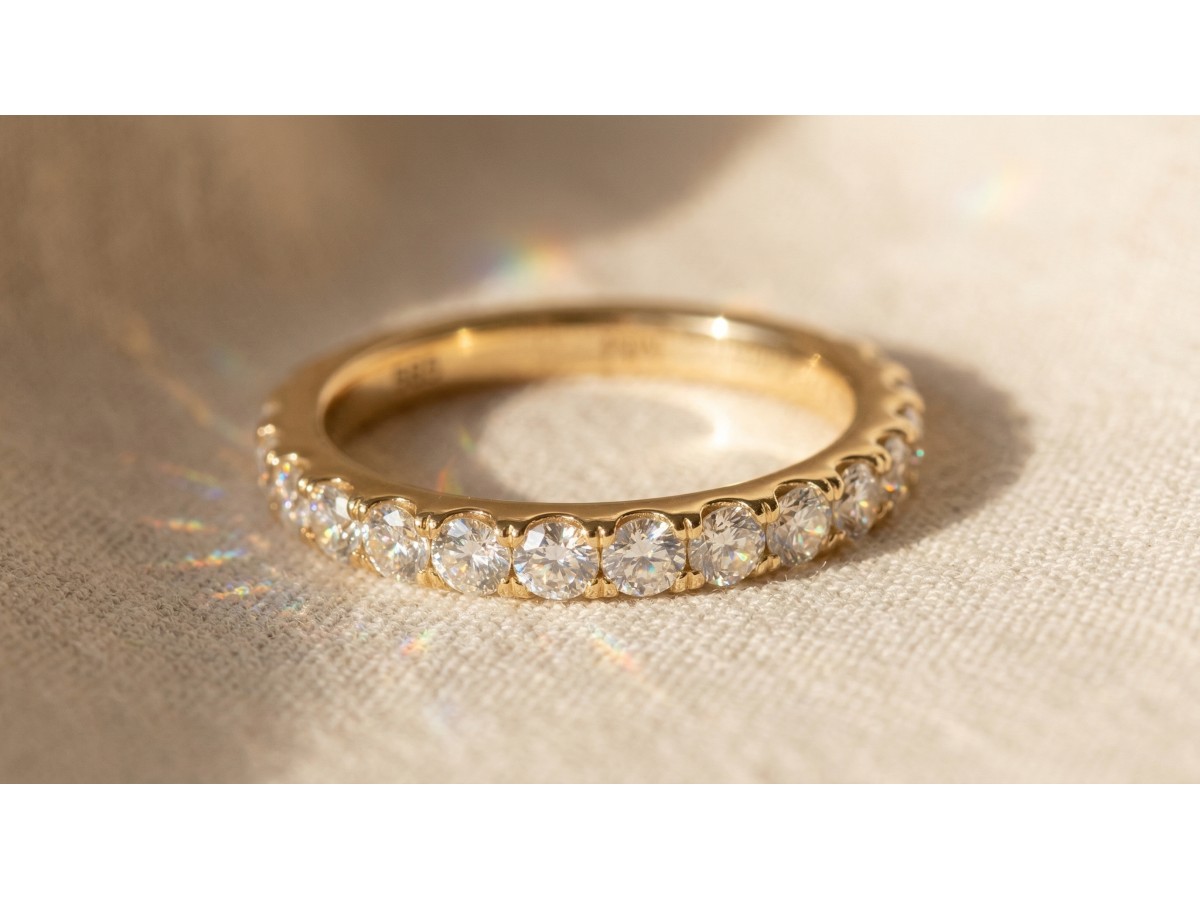
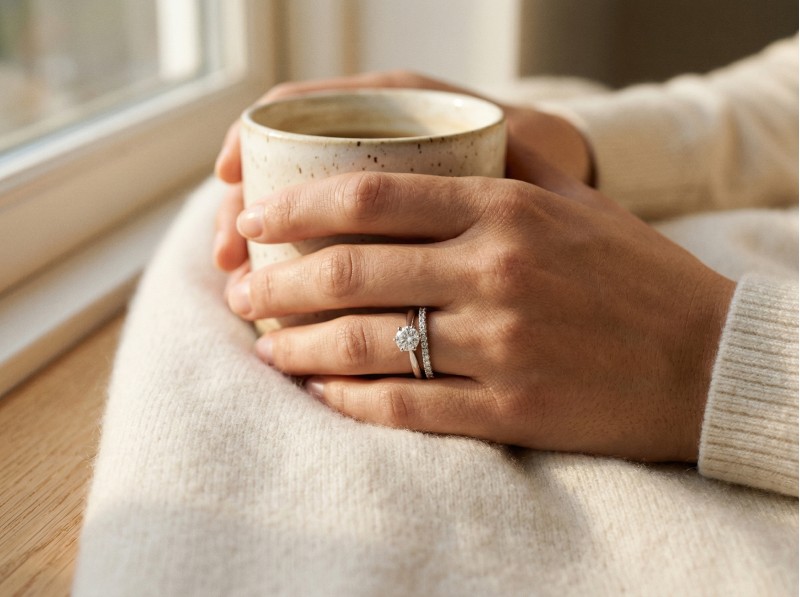
Moissanite is a silicon carbide gemstone known for its exceptional brilliance, fire, and hardness. It sits at 9.25 to 9.5 on the Mohs hardness scale, making it one of the most durable gemstones used in fine jewelry. You will find it set in engagement rings, earrings, necklaces, pendants, and bracelets, across a full range of precious metals. If you are encountering moissanite for the first time, this article covers everything you need to know: what it is, where it comes from, how it performs, and what to look for when buying.
Where moissanite comes from
The story begins in 1893, when French chemist Henri Moissan was examining rock samples from a meteorite crater in Canyon Diablo, Arizona. Inside those samples, he found microscopic crystals of a mineral no one had identified before. That mineral turned out to be silicon carbide. It was later named moissanite in his honor.
Natural moissanite is extraordinarily rare. The original find consisted of tiny fragments trapped inside meteorite rock, and subsequent searches have yielded only trace quantities in certain types of volcanic rock and geological formations. Natural moissanite gemstones large enough for jewelry simply do not exist in any meaningful supply. What Henri Moissan discovered was essentially a cosmic mineral, formed under the extreme conditions of space, arriving on Earth embedded in a fragment of meteorite.
That origin gives moissanite a fascinating provenance. Rather than a laboratory invention, it is a genuine mineral with a documented natural form.
How moissanite is created
Because natural moissanite is so rare, all moissanite used in fine jewelry today is lab-created. The process involves growing silicon carbide crystals under carefully controlled thermal conditions over a period of several weeks. The resulting crystals share the same chemical composition and crystal structure as the natural mineral Moissan first identified.
Once grown, the crystals are cut and polished by skilled gem cutters using the same techniques applied to other precious stones. The controlled growing environment ensures consistent quality from stone to stone.
Lab-created moissanite is pure silicon carbide. It is produced through a process that replicates the conditions under which it forms naturally, just without the meteorite.
Brilliance and fire
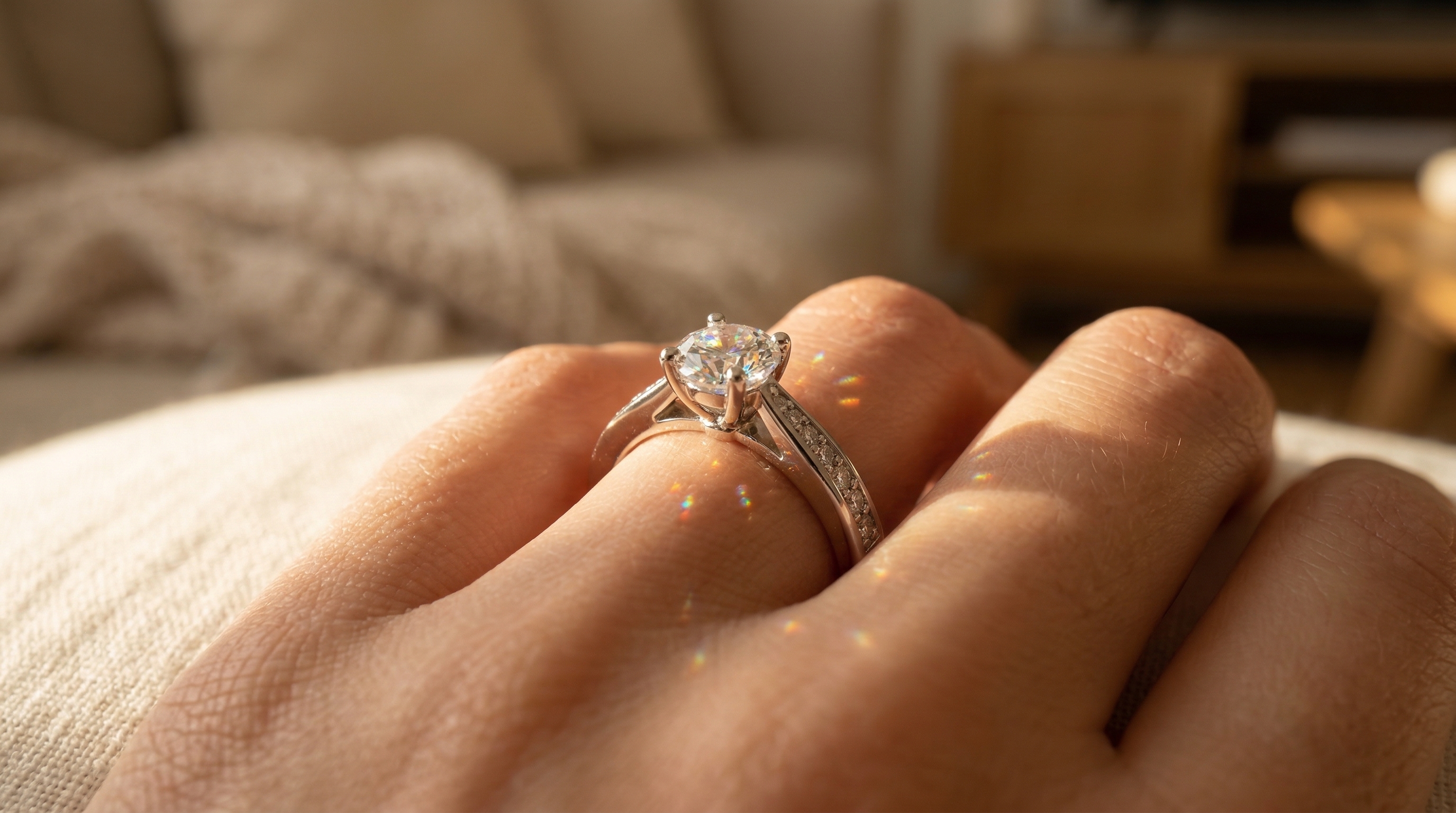
Moissanite has a refractive index of 2.65, one of the highest of any gemstone used in jewelry. The refractive index determines how strongly a stone bends light as it passes through, and a higher value produces stronger brilliance: the white light that reflects back to your eye when you look at the stone.
Alongside brilliance, moissanite has strong fire. Fire refers to the dispersion of light into spectral colors, the flashes of orange, blue, green, and violet you see as the stone moves. This is measured by a stone's dispersion value, and moissanite's is notably high, which is why the colorful flashes are so vivid.
Moissanite also exhibits double refraction, meaning light entering the stone splits into two separate rays as it travels through the crystal. In larger stones, this creates an additional layer of visual depth and sparkle. It is one of the optical signatures that makes moissanite distinctive.
Over time, moissanite retains its brilliance exceptionally well. Its hardness makes it resistant to the surface abrasion that gradually dulls softer stones, and the optical properties are stable. A routine clean with warm water and a soft brush is enough to restore full brightness.
Hardness and durability
On the Mohs hardness scale, moissanite scores 9.25 to 9.5. That places it second among gemstones commonly used in fine jewelry, harder than sapphire (9), ruby (9), and emerald (7.5 to 8).
Hardness is directly relevant to how a gemstone holds up in daily wear. A harder stone resists scratching from everyday contact with surfaces, other objects, and normal handling. Moissanite is highly scratch-resistant under normal conditions, which is why it works so well in rings, where the stone faces more physical contact than it would in earrings or a pendant.
For engagement rings and wedding bands, durability is not a minor detail. These are pieces worn every day for years, and the gemstone needs to perform accordingly. Moissanite is built for exactly that kind of long-term wear.
Color and clarity grading
Moissanite is graded using a system that will be familiar if you have looked at other gemstones.
Color is graded on a scale from D (completely colorless) through to lower grades that show progressively warmer or yellowish tints. D colorless is our highest standard. A D colorless moissanite appears bright and white, with no visible warmth or tint to the naked eye.
Clarity refers to the presence of inclusions, small internal characteristics within the stone. VVS1 (Very Very Slightly Included, grade 1) means inclusions are present but so minor they are not visible without magnification. To the naked eye, a VVS1 stone looks completely clean.
Both grades matter in terms of what you actually see when wearing the jewelry. A D colorless, VVS1 moissanite looks bright, clear, and free of visible flaws. These are the grades used across the standard range.
Cut quality and why it matters
Of all the factors that determine how a moissanite looks, cut is the most important. Color and clarity affect what the stone is. Cut determines how well it performs optically.
An excellent cut means the stone's facets are angled and proportioned to maximize how light enters, moves through, and exits the stone. Light that enters at the right angle bounces internally and returns to your eye as brilliance. Light that leaks out the bottom or sides is lost. A well-cut stone captures light effectively. A poorly cut stone of identical color and clarity will look noticeably flatter and duller.
Carat weight is often the number buyers focus on, but a larger stone with a mediocre cut will underperform a smaller stone with an excellent cut. Visual impact comes from how the stone handles light, not from its dimensions alone.
Excellent cut is the standard across the range.
Common stone shapes
Moissanite is cut into all the standard gemstone shapes. Each has a distinct character that suits different ring styles and personal preferences.
- Round brilliant: The classic choice. The round brilliant cut is specifically designed to maximize light return, producing the strongest overall sparkle. It is the most popular shape for engagement rings.
- Oval: An elongated version of the round brilliant. Oval moissanite has strong brilliance and a modern, elegant silhouette. The elongated shape can also make the stone appear larger than its carat weight suggests.
- Cushion: Square or rectangular with softly rounded corners. Cushion cut stones have a warm, vintage quality and produce a slightly softer, more romantic pattern of light.
- Emerald: A step-cut shape with long, parallel facets and a rectangular outline. Emerald cut moissanite has a clean, architectural look with dramatic flashes of light rather than scattered sparkle.
- Pear: A teardrop shape that combines the round brilliant at one end with a pointed tip at the other. Pear moissanite has a distinctive, graceful silhouette.
- Marquise: An elongated shape with pointed tips at both ends. The marquise cut makes the stone appear very large relative to its weight and creates a bold, elongating effect on the finger.
- Princess: A square shape with brilliant-style facets. Princess cut moissanite has sharp corners and strong, crisp sparkle.
- Radiant: A rectangular or square shape with trimmed corners and brilliant-style facets. Radiant cut stones combine the clean lines of an emerald cut with the light performance of a brilliant cut.
- Heart: A symmetrical heart-shaped cut. Heart moissanite is a bold, romantic choice that makes the shape of the stone the centerpiece of the design.
All of these shapes are available across the full rings range.
Moissanite in fine jewelry
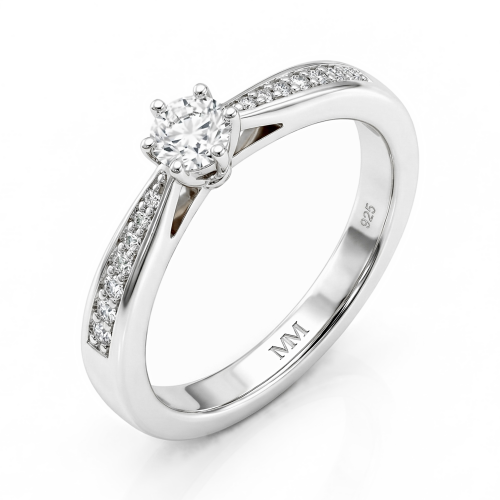
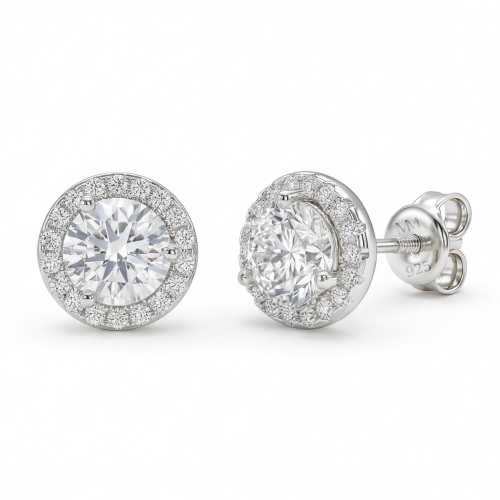
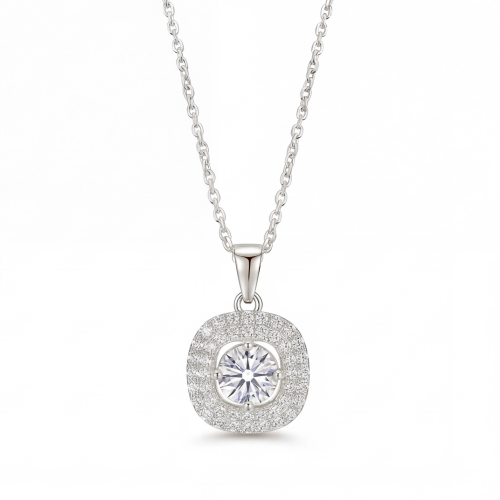
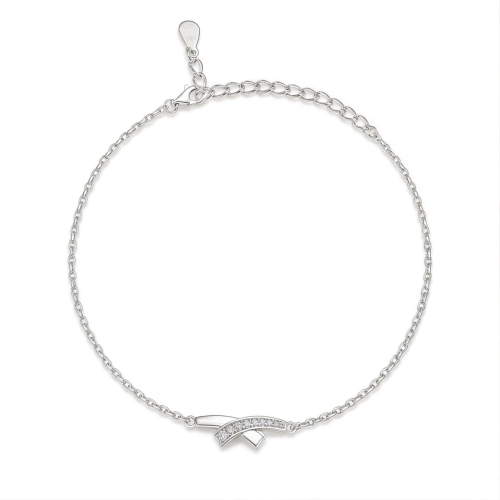
Moissanite is available across every major jewelry category. At My Moissanite, every standard design comes in eight solid precious metal options: 925 sterling silver, 14K solid yellow gold, 14K solid white gold, 14K solid rose gold, 18K solid yellow gold, 18K solid white gold, 18K solid rose gold, and 950 platinum. Silver and white gold pieces are rhodium-plated for added surface protection and a bright, clean finish.
The full range covers engagement rings, wedding rings, eternity rings, stud earrings, hoop earrings, drop earrings, pendants, necklaces, tennis bracelets, and more. Whether you are buying a solitaire ring for a proposal, a pair of stud earrings as a gift, or a pendant for yourself, every piece is made in a precious metal with the same standard of moissanite throughout.
Ready to browse? The full collection is a good place to start, or go straight to engagement rings if that is what you are looking for.
What to look for when buying moissanite
Four things matter most when choosing a moissanite piece.
- Cut quality: Look for excellent cut. This has more impact on how the stone looks than any other single factor. Do not trade cut quality for a larger stone size.
- Color and clarity: D colorless and VVS1 are our highest standard. A stone at these grades will look bright, white, and completely clean to the naked eye.
- The precious metal: Make sure the piece is made in a solid precious metal: 925 silver, 14K gold, 18K gold, or 950 platinum. The metal determines how the piece wears over years, not just how it looks when new.
- A trusted seller: Look for verified public reviews, a clear exchange policy, and support that responds when you need it. Moissanite is not a fragile choice, but the buying experience should be backed by a seller you can reach.
Frequently asked questions
What is moissanite made of?
Moissanite is made of silicon carbide (SiC), a naturally occurring mineral first discovered in 1893. Today, moissanite used in jewelry is lab-created through a controlled thermal process that produces silicon carbide crystals with the same chemical composition and crystal structure as the natural mineral.
Is moissanite a real gemstone?
Yes. Moissanite is a genuine gemstone with a defined mineral composition, crystal structure, and measurable physical properties. Lab-created moissanite is chemically and structurally identical to the natural mineral first found in a meteorite. It is graded, cut, and set using the same standards as other precious stones used in fine jewelry.
How hard is moissanite?
Moissanite rates 9.25 to 9.5 on the Mohs hardness scale, making it the second hardest gemstone commonly used in fine jewelry. It is harder than sapphire, ruby, and emerald, and highly resistant to scratching under normal daily wear conditions.
Does moissanite lose its sparkle over time?
No. Moissanite retains its brilliance exceptionally well over time. Its hardness means it resists the surface scratching that can dull softer gemstones. A routine clean with warm water and mild soap is enough to keep it looking its best.
What should you look for when buying moissanite?
The four most important factors are cut quality (excellent cut has the greatest impact on how the stone looks), color and clarity (D colorless and VVS1 are our highest standard), the precious metal (look for solid 925 silver, 14K gold, 18K gold, or 950 platinum), and a trusted seller with verified reviews, a clear exchange policy, and responsive support.
Your next step
If you are ready to explore, the full collection covers every category in all eight precious metal options. For proposals and engagement pieces specifically, the engagement rings range is the best place to start.
Any questions about stone size, ring size, metal choice, or delivery timing are answered quickly through the chat on the website. The team responds within 1 to 2 hours during European business hours.